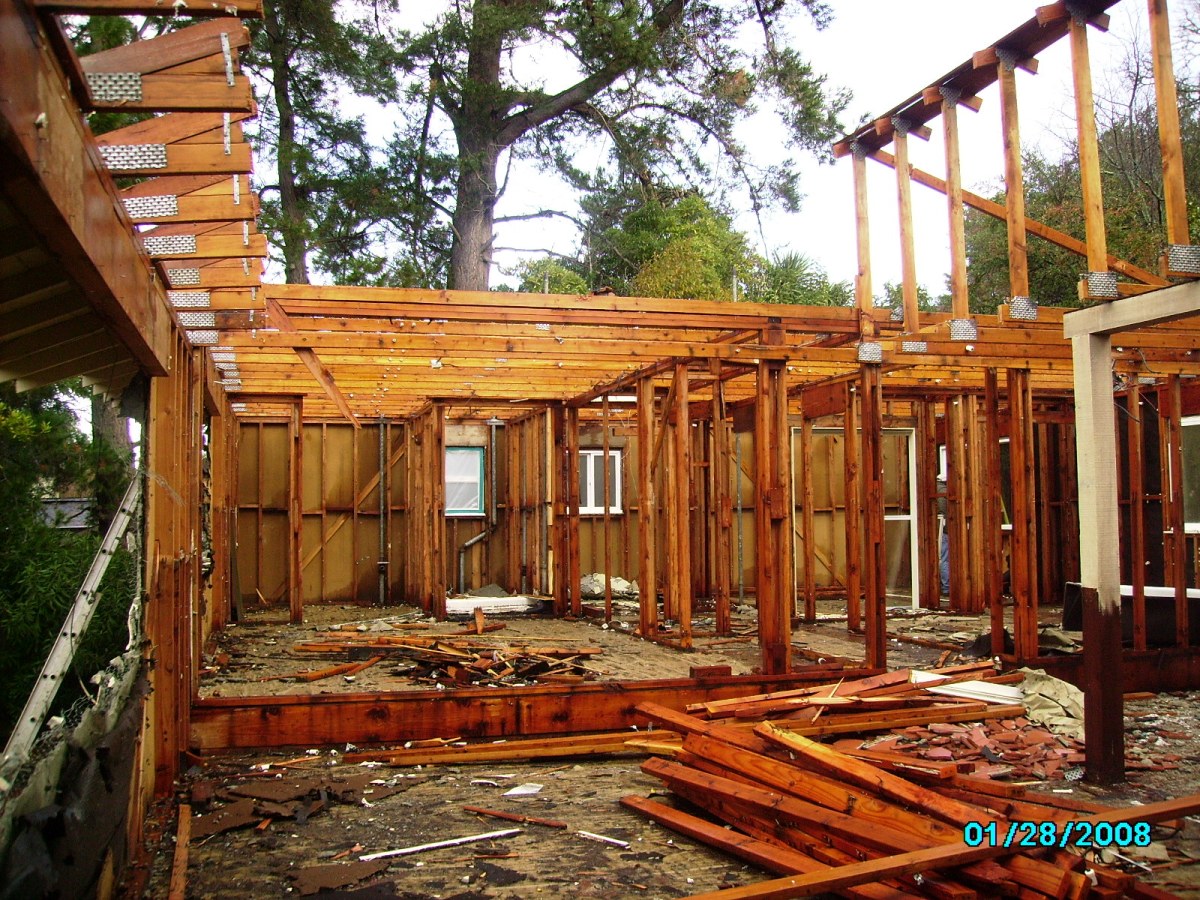
“Demolition” and “deconstruction” sound like the same thing – and contractors often use them interchangeably. They’re not. They’re two different processes with different timelines, different costs, and different financial outcomes. Picking the wrong one can cost you thousands.
Here’s the difference in plain English, and how to decide which one fits your project.
Demolition (the fast way)
Demolition is machine-driven destruction. An excavator with a thumb attachment knocks the structure down, debris is loaded into trucks, and the lot is cleared.
- Speed: 3-7 days for a typical single-family home
- Cost: $15,000-$30,000 in the Bay Area for an average home
- Landfill diversion: 30-40% (mostly clean concrete and metal recycling)
- Tax benefit: None – it’s a project expense, not a charitable contribution
This is the right scope when you need the lot cleared fast, the home has limited reusable material, or you don’t have the tax position to use a charitable deduction.
Deconstruction (the smart way for the right home)
Deconstruction is hand-disassembly. A crew removes lumber, cabinets, doors, windows, fixtures, flooring, and hardware in reusable condition, packs them out, and delivers them to a non-profit partner. An IRS-qualified appraiser values the materials, and you claim the appraised value as a charitable deduction on your tax return.
- Speed: 2-4 weeks
- Cost: $25,000-$45,000 in labor
- Landfill diversion: Up to 85%
- Tax benefit: $30,000-$80,000+ appraised donation, worth $12,000-$35,000 in tax savings at typical Bay Area marginal rates
This is the right scope when the home has reusable materials, you have 2-4 weeks for the demo phase, and you can use a substantial charitable contribution against your tax bill.
The honest financial comparison
For most Bay Area homeowners with average homes, deconstruction comes out $5,000-$15,000 ahead of straight demolition after the tax benefit. Older homes with quality materials lean even further in deconstruction’s favor.
| Demolition | Deconstruction | |
|---|---|---|
| Labor cost | $18,000 | $32,000 |
| Disposal | $10,000 | $3,000 |
| Out-of-pocket | $28,000 | $35,000 |
| Donation appraisal | – | -$50,000 |
| Tax benefit (42% combined) | – | -$21,000 |
| Net cost | $28,000 | $14,000 |
(Representative example for a 2,000 sq ft home. Your numbers will vary based on home condition, materials, and tax position. Confirm with your CPA.)
Selective demolition: a third option
If you’re not tearing down the whole structure – just remodeling a kitchen, opening up a wall, or doing a tenant improvement – you don’t need either full demolition or full deconstruction. You need selective demolition: targeted removal of specific components while leaving the rest intact.
Selective demolition is its own scope, priced separately, and is the standard for remodels, additions, and seismic retrofits. More on selective demolition here.
How to decide
Use this decision tree:
- Are you tearing down the whole structure? → Demolition or Deconstruction
- Only removing parts? → Selective Demolition
For a full teardown:
- Does the home have reusable materials (hardwood, solid cabinets, quality fixtures)?
- Do you have 2-4 weeks for the demo phase?
- Can you use a $30,000-$80,000+ charitable deduction on your tax return?
If you said yes to all three, deconstruction is almost certainly the better financial and environmental choice. If you said no to any of them, straight demolition is the right call.
What Mavco does
Mavco runs both demolition and deconstruction across the Bay Area and Northern California. We walk every property and recommend the right scope honestly – including telling you when straight demolition is the better answer.
If you’re not sure which one fits, request a free walkthrough. We’ll evaluate the home, estimate the donation appraisal range if deconstruction makes sense, and quote both options so you can compare side-by-side.