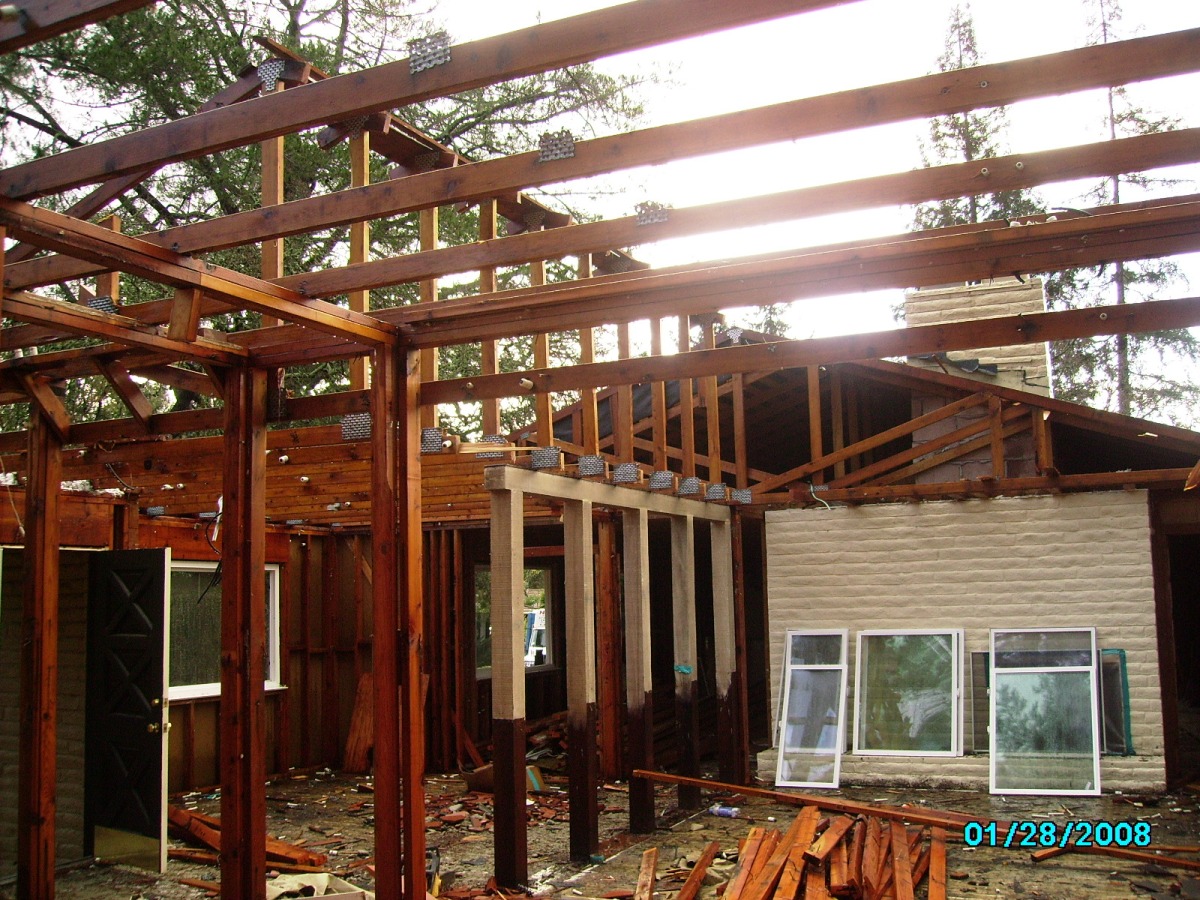
If you are remodeling, demolishing, or just clearing out a building, the materials coming out of your project have real value. Cabinets, doors, windows, lumber, fixtures, and architectural details can be donated to qualifying non-profits in the Bay Area for a tax-deductible receipt – often worth $5,000-$80,000+ depending on the project scope.
Here is the practical guide to who accepts what, how the donation works, and how to maximize your tax deduction.
The main Bay Area non-profits that accept building materials
Habitat for Humanity East Bay/Silicon Valley ReStore
Locations: Oakland, San Jose, San Carlos
Accepts: Working appliances, cabinets, doors, windows (newer than 1980), lighting, hardware, lumber, flooring, building supplies. Resells the materials at their retail stores; proceeds fund affordable housing builds in the East Bay and Peninsula.
How they price: They issue a donation receipt acknowledging what was donated; you (or your IRS-qualified appraiser) determine fair market value.
Habitat for Humanity Greater San Francisco ReStore
Location: San Francisco (when operating)
Accepts: Similar to East Bay – building materials, fixtures, working appliances. Local pickups available for larger donations.
The ReUse People of America (TRP)
Bay Area reach: Yes – they coordinate deconstruction with appraisals nationwide
Specialty: Whole-house deconstruction projects. TRP is one of the original non-profit deconstruction partners and specifically focuses on the IRS-qualified appraisal model.
Building REsources
Location: San Francisco
Accepts: Salvaged building materials, vintage architectural elements, historic millwork. A non-profit warehouse and resale operation.
Urban Ore
Location: Berkeley
Accepts: Practically everything – building materials, fixtures, furniture, hardware, architectural salvage. Pickups available for larger donations.
Hangar 18 Salvage
Location: South Bay / Peninsula
Accepts: Vintage and architectural salvage, specialty fixtures, period materials.
What each non-profit typically accepts vs declines
| Material | Usually accepted | Often declined |
|---|---|---|
| Solid wood cabinets (intact) | Yes | If damaged or particle-board |
| Doors (interior + exterior) | Yes, post-1980 | Pre-1980 (lead paint risk) |
| Windows | Yes, post-1980, intact glass | Single-pane, broken, lead-painted |
| Appliances | Yes, working | Non-working, pre-1995 |
| Plumbing fixtures (toilet, sink, tub) | Yes, intact | Cracked or stained beyond cleaning |
| Light fixtures | Yes | Recessed cans typically declined |
| Hardwood flooring | Yes if removed cleanly | Damaged or contaminated |
| Lumber (2×4, dimensional) | Yes if denailed and clean | Painted, treated, or rotted |
| Architectural details (mantels, molding, hardware) | Yes – highest value | Reproductions of low quality |
| Brick and masonry | Sometimes | Cracked or contaminated |
| Tile | Generally not accepted | Hard to reuse without breakage |
| Carpet | No | Health/sanitation issues |
| Insulation | No | Compressed and contaminated |
Two paths to donate
Path 1: Drop-off (DIY)
You remove the materials carefully yourself or with your contractor, drive them to the non-profit’s location, get a donation receipt listing what you dropped off. You determine fair market value on your tax return.
Best for: small to medium donations under $5,000 total value. Quick, simple, no formal appraisal needed.
Path 2: Whole-project deconstruction with appraisal
A deconstruction contractor hand-dismantles your structure, materials go to one or more non-profit partners, and an IRS-qualified appraiser values the entire donation. You file IRS Form 8283 with your tax return.
Best for: teardowns, whole-house remodels, and any donation over $5,000 in value. Required if you want to claim a deduction over $5,000.
Why path 2 generates much larger deductions
When a non-profit issues a drop-off receipt, the donor is responsible for valuing each item conservatively. When an IRS-qualified appraiser values the donation, they apply consistent fair-market methodology across the entire scope and document quality with photos and detailed inventory.
For a typical Bay Area whole-house teardown, the difference is often $5,000 (DIY drop-off) vs $50,000-$80,000 (appraised whole-project). This is why deconstruction with donation referral has become the standard approach for Bay Area teardowns.
How the IRS Form 8283 process works
- Donations over $500 require Form 8283 to be filed with your tax return
- Donations over $5,000 require the appraiser to sign Section B of the form
- The appraisal must be done before the donated items leave your property (or shortly after)
- The appraisal is good for 60 days before the donation – donate within that window
- Keep photos, the appraisal, donation acknowledgment, and Form 8283 with your tax records
Reclaimed wood: special value
Old-growth Douglas fir, redwood, and other heritage Bay Area lumber commands a premium in the reclaimed wood market. Properly removed reclaimed lumber from a Bay Area teardown can appraise at $3-$8 per linear foot for select pieces, vs $0.50-$1.50 per board foot for typical dimensional lumber. Bay Area woodworkers and architects actively seek reclaimed beams and old-growth lumber for custom builds.
What you cannot donate (and what to do with it)
- Asbestos-containing materials: require licensed abatement and proper disposal
- Lead-painted items: typically cannot be donated for reuse
- Treated lumber: recycling outlets only
- Carpet, insulation, drywall: normal C&D waste streams
- Damaged or non-functional items: recycle metal, dispose of the rest
The Mavco process
For whole-project donations, Mavco coordinates the IRS-qualified appraiser, the non-profit partner(s) matched to your material mix, the BAAQMD permit, and all the paperwork. You sign one set of documents and hand the appraisal to your CPA at tax time.
For smaller donations during selective demolition projects, we coordinate drop-offs or pickups with the right local non-profit based on what is being removed.
See our deconstruction service or request a free donation referral consultation.
Always confirm donation valuation and tax treatment with a qualified CPA. This article is general information, not tax advice.